
If you’re a mom who feels like you’re doing your best with your family’s money but still wonders where it all went at the end of the month, you’re not alone.
Creating a family budget can feel overwhelming at first. There are bills to pay, groceries to buy, kids’ activities, unexpected expenses, vacations to save for, and all the little purchases that somehow add up.
But I’ve learned that a family budget isn’t really about restricting your spending. It’s about making a plan for the money God has entrusted to you so that it can serve your family and your priorities.
I’m the person who handles the budgeting and financial planning for our family of six. My husband is our main income earner, while I have more flexibility with my jobs to manage our household finances. I’ve also always been much more interested in the financial world than he has!
Over the years, I created a spreadsheet to help me keep track of our monthly expenses and see what we should have left at the end of each month. Eventually, I added more tabs to help me plan months ahead, track our net worth, and keep our financial goals in front of us.
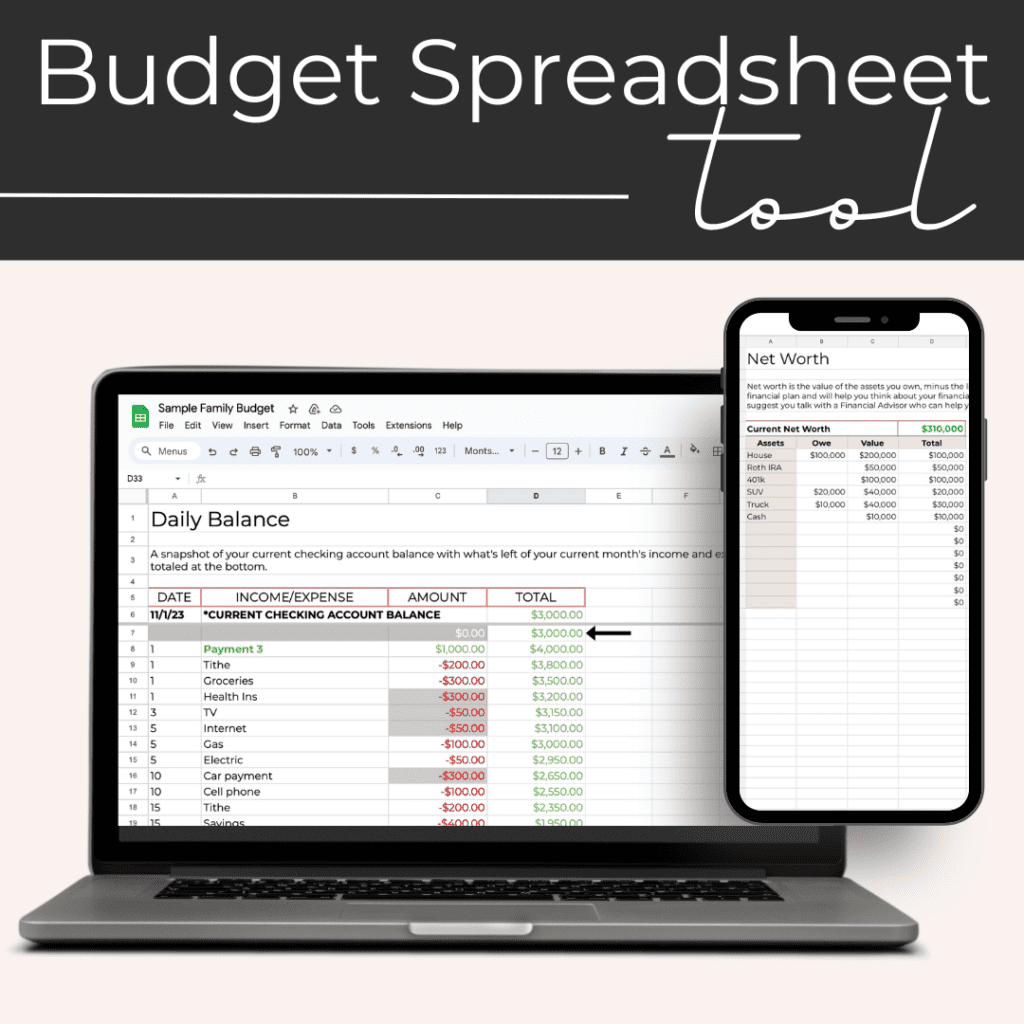
That spreadsheet has become a huge part of how I manage our family’s finances. It has helped me see the big picture rather than simply looking at what is happening in our bank account today.
And because it has been such a game changer for me personally, I eventually turned it into a tool that I could share with other families.
Start simple:
You need to know where your money is going and decide where you want it to go.
What Is a Family Budget?
A family budget is simply a plan for your money.
You look at how much money is coming in, determine what needs to go out, and make intentional decisions about the rest.
That’s it.
A budget doesn’t have to mean that you never spend money on things you enjoy. In fact, I think a good budget should make room for the things your family values.
The problem isn’t spending money.
The problem is spending money without a plan.
When you don’t have a plan, it’s easy to spend a little here and a little there. A restaurant meal doesn’t seem like a big deal. Neither does an extra trip to Target or picking up a few things at the grocery store.
But at the end of the month, those little decisions can add up to hundreds of dollars that you never intended to spend.
A budget gives you a chance to make those decisions ahead of time.
Why a Monthly Budget Isn’t Enough
One of the biggest changes I’ve made in the way I manage our family’s finances is that I don’t just look at one month at a time.
I plan ahead.
Our expenses aren’t exactly the same every month. Some months have birthdays. Some have school expenses. Summer brings vacations and activities. Christmas obviously looks different from January.
If I only looked at September’s expenses when planning September, I might think we have plenty of extra money.
But if I know that Christmas is coming, our insurance bill is due in a few months, and we’re planning a vacation next summer, I need to be thinking about those expenses now.
That’s why I eventually added future-planning tabs to my spreadsheet.
Your budget should help you see what’s coming beyond this month.
This is one of the biggest reasons I encourage families to look several months ahead.
Start with your regular monthly expenses
Begin by listing the expenses you know you have every month.
These might include:
- Mortgage or rent
- Utilities
- Insurance
- Cell phones
- Internet
- Car payments
- Debt payments
- Groceries
- Gas
- Childcare
- Giving
- Savings
- Subscriptions
Then add the expenses that don’t happen every month.
Don’t forget the irregular expenses
This is where many family budgets fall apart.
You know Christmas is coming every year. You know your kids will need school supplies. You know the car will eventually need repairs. You know you’ll probably want to take a vacation.
Those expenses aren’t really “unexpected.” They’re just irregular.
Instead of letting them surprise you, plan for them.
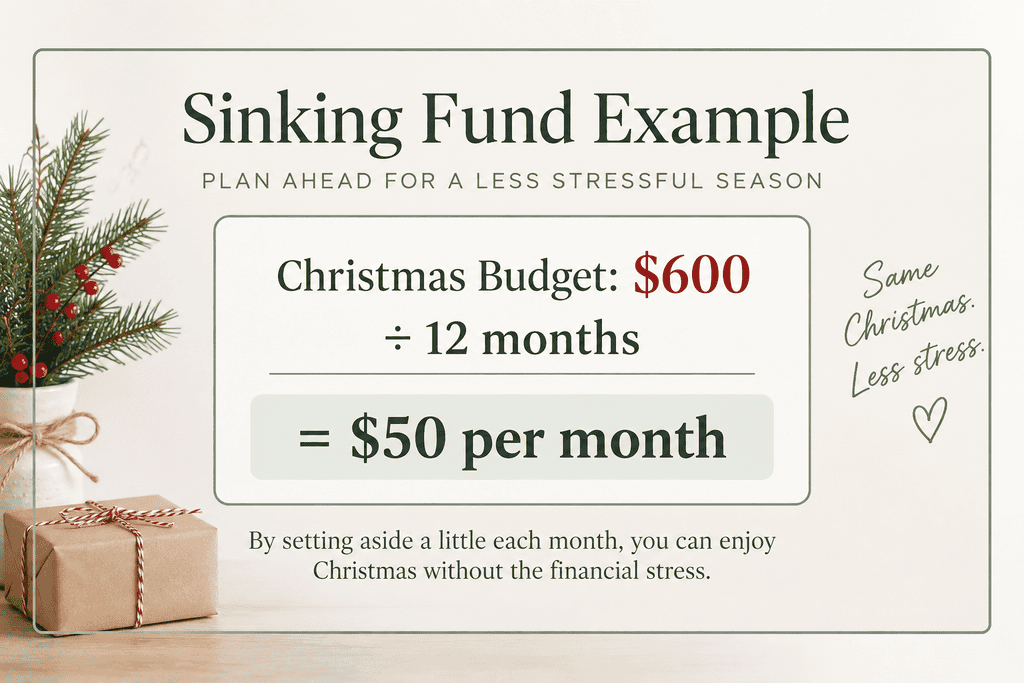
For example, if you expect to spend $600 on Christmas and you start saving in January:
$600 ÷ 12 months = $50 per month
That’s much easier to handle than finding $600 in December.
This is often called a sinking fund, and it’s one of my favorite budgeting tools.
Plan for the Month Ahead
Once you know your regular expenses, look at the upcoming month.
Ask yourself:
What is different about this month?
Maybe your child has a tournament that requires extra travel.
Maybe you’re taking a family vacation.
Maybe it’s someone’s birthday.
Maybe the kids need new shoes.
Maybe you have a larger insurance payment coming up.
Maybe it’s Christmas.
These expenses need to be included in your plan before the month begins.
I like to look several months ahead because it allows me to make adjustments before a large expense arrives.
If I know November will be expensive, I can make different decisions in September and October.
That’s much less stressful than reaching November and wondering how we’re going to pay for everything.
Give Your Grocery Budget Some Attention
Food is one of the categories that can easily get away from a family.
And it’s understandable. Grocery prices have changed, and feeding a family isn’t cheap.
But there are two different food problems that often get lumped together:
What you need to spend on food and what you spend because you didn’t plan.
Poor planning can lead to more restaurant meals, takeout, convenience foods, and extra trips to the grocery store.
You might run out of one ingredient and make a quick trip to the store. Then you see a few other things you need. Before you know it, you spent $50 instead of the $10 you originally planned to spend.
You don’t have to make your grocery budget miserable.
Instead, try planning your meals around what your family already enjoys, make a grocery list, and decide ahead of time how often you’ll eat out.
A little planning can make a surprisingly big difference.
Watch for the Expensive Seasons
Some months simply cost more than others.
Summer can be expensive because of:
- Vacations
- Camps
- Kids’ activities
- Day trips
- Entertainment
- Eating out
- Extra travel
Christmas can be another major pressure point.
It’s easy to convince ourselves that spending more will make Christmas more special for our children. We want to give them wonderful memories, and there’s nothing wrong with giving gifts or celebrating generously.
But generosity doesn’t require going into debt.
One of the most loving things we can do for our families is to stay within what we can actually afford.
A special Christmas isn’t worth spending January stressed about the credit card bill.
Budgeting Isn’t Just About Having Enough Money
This is something I wish I had understood better when I was younger.
I’ve always budgeted to some degree. But early in our marriage, I wasn’t doing nearly enough future planning.
We bought a house in a town where we weren’t planning to stay and ended up selling it less than a year later. We also struggled to increase our income while making it a priority for me to stay home with our children before they went to school.
We were budgeting month to month, but we weren’t always thinking ahead.
It wasn’t until about ten years ago that we had the capacity to start thinking more intentionally about our future.
That’s when future planning became a much bigger part of our financial goals.
We started thinking not only about “Can we afford this month?” but also:
- Where do we want to be in five years?
- What debt do we want to eliminate?
- What do we want to save for?
- How can we increase our income?
- What do we want retirement to look like?
- How can we increase our net worth?
- How can we become more generous?
That’s when budgeting became much more powerful for me.
You Don’t Have to Make More Money to Start Budgeting
One of the biggest misconceptions I see about money is that the answer is always to make more.
Certainly, increasing your income can be an important part of improving your family’s finances. We’ve experienced that ourselves.
But more income without a plan doesn’t necessarily solve the problem.
If you make $5,000 a month and don’t know where it goes, making $6,000 doesn’t automatically solve the problem.
And if you make $10,000 a month but spend $10,500, you still have a problem.
A budget forces us to look honestly at our spending.
Sometimes we don’t want to do that because we know what the numbers are going to tell us. We may discover that the thing we really want isn’t something we can afford right now.
That’s uncomfortable.
But it’s also freeing.
Because once you know the truth about your money, you can make a plan.
What If You Feel Like You Have Nothing Left?
If you’re looking at your budget and thinking, “There isn’t anything left to cut,” I’d start with the small, everyday spending that may be happening without much thought.
If money is tight, you probably don’t need to spend your free time wandering around Costco when you can order groceries online.
Find things to do that are good for your family and your health but don’t cost money.
Go for a walk.
Have friends over.
Visit a park.
Play a board game.
Read.
Go to the library.
Spend time outside.
There are plenty of ways to enjoy your life without spending money.
Then look at the bigger picture.
Can you reduce some expenses? Can you increase your income? Can you do both?
You don’t have to solve your entire financial situation in one month.
Start with one change.
Then another.
What Does the Bible Say About Debt?
My approach to finances has been heavily influenced by Dave Ramsey’s teachings over the years. His ideas gave me a foundation that I’ve built on while continuing to learn about investing, retirement planning, and other areas of personal finance.
But ultimately, my desire to manage our family’s money well comes from something bigger than a budgeting system.
It comes from our desire to be good stewards of what God has given us.
The Bible has a lot to say about money, including warnings about debt.
Proverbs 22:7 says, “The borrower is slave to the lender.”
Romans 13:8 tells us to “owe no one anything, except to love each other.”
Debt is incredibly easy to access in our culture. Credit cards, loans, and financing can make it possible to purchase something today and worry about paying for it later.
But becoming free from debt can change what your family is able to do with its money.
Instead of sending so much of your income toward past purchases, you can use more of your money for your family’s current needs, future goals, and generosity.
Financial freedom isn’t about having more so that we can spend more. It’s about having greater freedom to use our resources according to our values.
Your Budget Should Serve Your Family
I don’t believe there is one perfect budgeting method that every family needs to follow.
I listen to financial podcasts, continue learning about investing and retirement planning, and have worked in the financial planning industry. I’ve taken ideas from many different places and adapted them to our family’s situation.
Your budget doesn’t have to look exactly like mine.
The important thing is that it helps you answer three questions:
How much money is coming in?
Where is our money going?
What are we trying to accomplish with it?
Once you can answer those questions, you can begin making intentional decisions.
And that’s really what a budget is.
It’s not about depriving your family.
It’s not about obsessing over every dollar.
It’s not about never enjoying your money.
It’s about deciding ahead of time what matters most and giving your money a job.
Start With These 5 Steps
If creating a family budget feels overwhelming, don’t try to do everything at once.
Start here:
1. Calculate your monthly income.
Know how much money your family actually has available to work with.
2. List your regular expenses.
Write down your bills, groceries, gas, debt payments, giving, savings, and other regular expenses.
3. Look ahead.
Include the larger expenses you know are coming over the next several months.
4. Identify your problem areas.
Where does your spending regularly go over budget? Food? Shopping? Entertainment? Eating out?
Don’t judge yourself. Just be honest.
5. Choose your financial goals.
Pick a few things you’re working toward.
Maybe it’s paying off debt.
Maybe it’s building an emergency fund.
Maybe it’s saving for a vehicle.
Maybe it’s investing for retirement.
Maybe it’s simply getting through the month without using a credit card.
Whatever your goals are, put them somewhere you can see them.
Because a budget isn’t just about what you’re giving up.
It’s about what you’re working toward.
A Budget Can Give You More Freedom
When I first started budgeting, I mostly thought about making sure we had enough money to get through the month.
Now I see budgeting differently.

I want to know what’s happening this month, but I also want to know what’s coming next month, next year, and eventually years down the road.
I want to know our net worth.
I want to know our goals.
I want to know what we’re saving for.
I want to know what debt we’re eliminating.
And I want our financial decisions to reflect the things that matter most to our family.
That’s why creating a family budget has been such a game changer for me.
You don’t need a perfect financial plan to get started. You just need to be willing to look honestly at what you have, make a plan for it, and take the next step.
And if you’re a mom who manages the finances for your family, remember this:
You don’t have to figure everything out overnight.
Start where you are.
Make a plan.
Look ahead.
Keep learning.
And give your family the gift of intentionality with money.